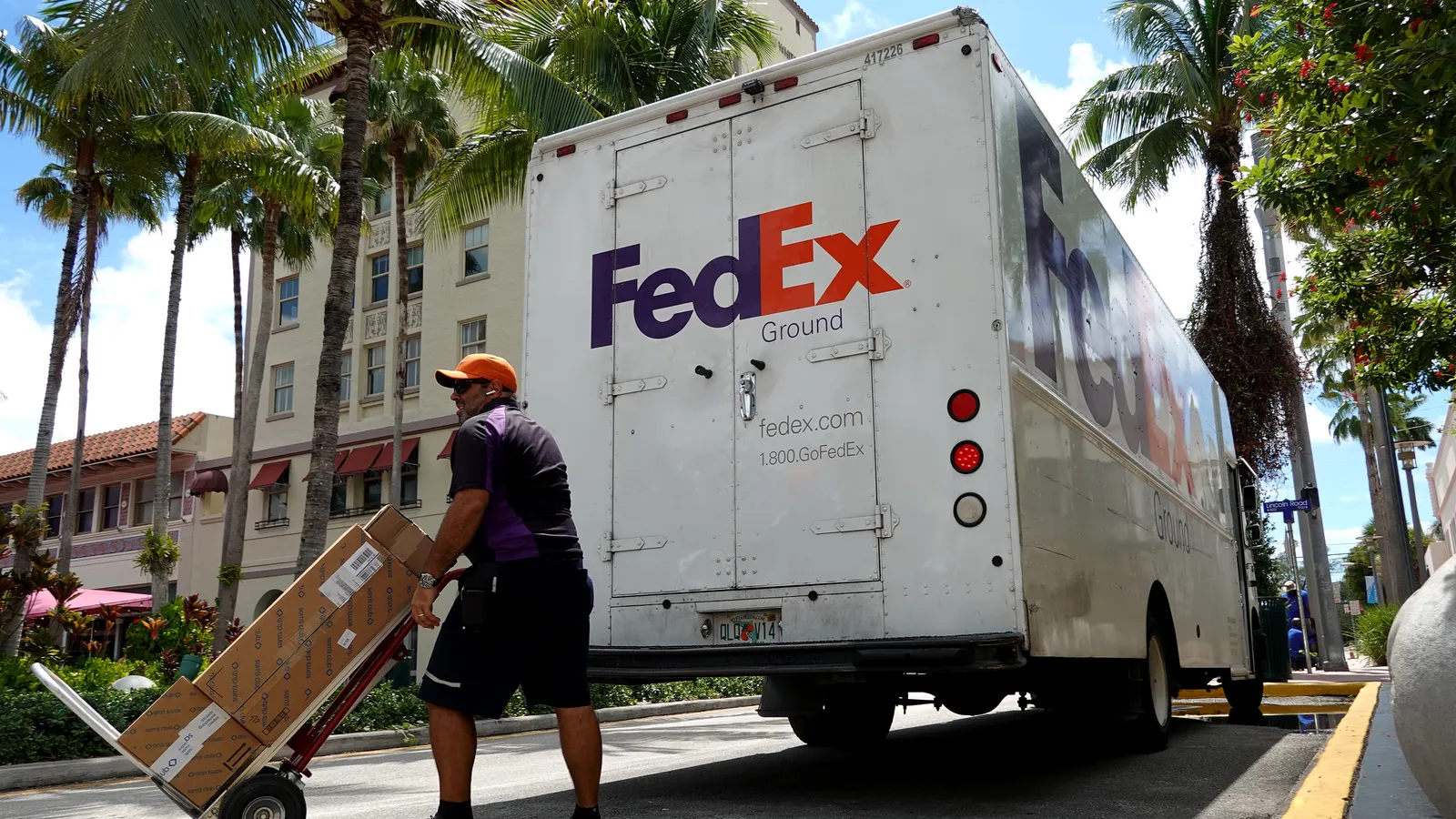
The new “FedEx SameDay Local” offering will let shoppers choose two-hour or end-of-day delivery directly at checkout. The service will connect FedEx customers to a national network of more than 1,000 delivery providers, coordinated through intelligent orchestration. Orders are then automatically matched to the appropriate vehicle and driver, dispatched quickly, and tracked with live updates from pickup to delivery.
According to FedEx, the accelerated options are necessary because consumers don’t just expect “as fast as possible” delivery for every order—they increasingly want more choices. For example, some purchases need to arrive immediately, others must come within a precise time window, and sometimes shoppers want the most economical option and are willing to wait.
The FedEx service was announced a week after Amazon introduced faster delivery options with new 1-hour and 3-hour options. The Seattle-based online retailer and logistics service provider (LSP) said customers in a growing number of cities and towns can now get over 90,000 products delivered to their doorstep in three hours or less.
That network includes 1-hour delivery now available in hundreds of cities and towns across the U.S., and 3-hour delivery in over 2,000 cities and towns. Consumers can check if their area has 1-hour or 3-hour delivery by visiting www.amazon.com/getitfast.
Since its launch in 2015, Amazon Same-Day Delivery has expanded to offer delivery on millions of items to customers in more than 9,000 cities and towns across the U.S. According to the company, its Same-Day Delivery sites function as highly efficient hubs that enable the full lifecycle of an order under one roof, from fulfillment to final delivery. Over time, this integrated approach, coupled with its predictive AI inventory placement algorithms, has streamlined the picking, sorting, and fulfillment processes to enable even faster delivery speeds, Amazon said.
Lytx fleet risk report finds collision rates rose just 4% in 2025
DC Velocity Staff
DC Velocity
2026-03-24
An analysis of the driving risks facing today’s fleets shows that collision rates have begun to level off, rising just 4% in 2025, highlighting a dramatic shift after post-pandemic surges, according to fleet video and safety platform provider Lytx.
Most importantly, the rate of severe crashes per mile fell by 4%, and moderately severe collisions plummeted by a substantial 41%, according to Lytx’s “2026 Road Safety Report.” The study cited similar results from the National Safety Council’s estimates of a 12% reduction in motor vehicle fatalities in 2025, despite Americans driving a record number of miles.
Yet the data issues a stark warning: less severe crashes are climbing at an alarming pace, with minor collisions up 5% and low-severity incidents soaring 16%.
Those results come from data in Lytx’s global driving database, which encompasses more than 341 billion miles of data analyzed from 6.3 million drivers in over 90 countries. In 2025, Lytx identified and examined over 217 million new driving events and processed upwards of 126 billion minutes of video via Lytx event recorders.
Additional results showed:
Near collisions dropped a dramatic 23% from last year’s all-time high
Coaching efforts on device use (such as smartphones) surged 40%, reflecting intensified focus on distraction reduction
The top four riskiest U.S. roadways are concentrated near major airports, amplifying urban hazards
July remains the deadliest month for drivers, underscoring seasonal risk patterns
According to a report from Virginia-based PMMI, the growth in AI’s role can be attributed to:
Lower costs and increased accessibility for companies of all sizes.
Higher awareness and movement beyond pilot projects.
Stronger confidence in the technology and willingness to invest.
Greater acceptance as workers, especially on the frontline, experience tangible benefits.
As use of AI expands, the most common applications fall into five categories: knowledge transfer; machine vision; predictive maintenance; regulation and compliance; and data transparency.
Despite that growing usage, obstacles remain to implementing AI. Primary concerns include data hallucinations and accountability for AI-generated errors. This has increased interest, especially from smaller firms, in software-as-a-service models that shift risk to providers, PMMI said. Other barriers include: cybersecurity, internal attitudes, ROI, latency challenges, existing data infrastructure, job security, and gaps in operational readiness.
Those conclusions come from a report titled “Building an AI Advantage in Packaging Equipment,” which is based on interviews with AI vendors, packaging machinery manufacturers, and consumer packaged goods companies.
“Manufacturers across the packaging value chain are recognizing that AI can help address some of their most pressing challenges, from workforce knowledge gaps to operational efficiency. What we’re seeing now is a shift from isolated pilots toward broader adoption, where AI supports smarter, more connected production environments,” says Jorge Izquierdo, vice president, market development at PMMI.
Georgia Ports to open $134 million inland port in May
Located in Gainesville, Georgia, the site is designed to allow local manufacturers — including poultry, heavy equipment, and forest product companies — to reach international markets more efficiently.
At full build-out, the $134 million Gainesville Inland Port (formerly known as the Blue Ridge Connector) will have an annual capacity of 200,000 containers. The facility is based on direct rail service running five days a week between Northeast Georgia and Savannah, giving shippers an alternative to a 600-mile roundtrip truck route, and serving to reduce trucks on Georgia’s highways and in the Atlanta region.
“Our new inland rail facility in Gainesville, Georgia, will significantly offset truck traffic congestion in Atlanta and improve air quality by replacing an estimated 26,000 truck roundtrips in the first year alone. We’re already seeing positive customer engagement, and Norfolk Southern will bring an excellent level of service working together with GPA,” said Georgia Ports President and CEO Griff Lynch.
The facility is part of Georgia Ports’ nearly $5 billion overall infrastructure investment plan over the next decade to expand berths, yards, gates, inland ports and rail capacity.
Ecommerce technology provider Salesforce has announced new search functionality that adopts agentic artificial intelligence (AI).
The changes to search functionality follow the Salesforce acquisition of Cimulate, an AI-powered product discovery startup. In announcing the new feature, Salesforce said it introduced Cimulate’s “intent-aware” search for Agentforce Commerce, which is the former’s ecommerce suite and features agentic AI.
Pei Thong, product marketing director at Salesforce, wrote in a blog announcing the feature that it’s not “just a faster search bar.”
“It’s an AI-native discovery engine that interprets natural language and real-time behavior to predict exactly what a shopper wants,” Thong wrote.
Salesforce is also enabling retailers to reach shoppers through third-party AI channels. Through a new integration with the OpenAI’s Agentic Commerce Protocol (ACP), Salesforce merchants can surface their product catalogs directly within ChatGPT.
Additionally, Salesforce is supporting the Universal Commerce Protocol (UCP), which Google helped to develop. Through that support, retailers can power AI-driven shopping across AI Mode in Google Search and the Gemini app, according to Salesforce.
In North America, 78 of the Top 2000 online retailers use Salesforce as their ecommerce platform, according to Digital Commerce 360 data. In 2025, those 78 online retailers combined for more than $192.60 billion in web sales. The Top 2000 is Digital Commerce 360’s database ranking North America’s largest online retailers by their annual ecommerce sales.
Salesforce uses Cimulate acquisition to power agentic search
Salesforce said it will support Cimulate’s CommerceGPT technology across digital storefronts using Agentforce Commerce. Furthermore, Thong wrote that Salesforce is helping move merchants “from simple keyword matching to intuitive, conversational discovery.”
Thong outlined three ways merchants can use the new Salesforce agentic search functionality:
Intent-driven discovery. She said merchants can move beyond static keywords to understand shopper intent. That helps to find and explore products through real-time, natural conversation, according to Thong.
More relevant results. Merchants can use Salesforce’s commerce-optimized small language model (SLM) context engine to provide “highly relevant search results and discovery experiences,” she wrote. The SLM engine combines real and simulated journey data.
Merchandiser productivity. Thong said the functionality removes the need for extensive rule creation and maintenance. At the same time, it gives merchandisers tools to control AI-generated responses, she said.
How retailers are using
Alibaba International announces AI agent fleets via Accio Work
Abbas Haleem
Digital Commerce 360
2026-03-24
Alibaba International has announced a new artificial intelligence (AI) agent that it calls Accio Work. The agent, according to its maker, is “a plug-and-play” tool that “equips businesses with an immediate, no-code taskforce.”
The company said in its announcement that Accio Work does require setup. Rather, its platform “deploys specialized agents to execute complex, long-horizon operations.”
Alibaba framed Accio Work’s AI agent as signalling a shift toward what it called “Agentic Business.” In Alibaba’s view, that means “a new era where AI moves beyond passive Q&A tools to become active, autonomous executors.”
Kuo Zhang, president of Alibaba.com and vice president of Alibaba International, said the company’s goal is “to democratize enterprise-grade AI.”
“We want every entrepreneur — regardless of team size — to access an intelligent workforce that operates with the scale of a major corporation,” Zhang said in a statement. “Small businesses will find Accio Work especially useful.”
Alibaba said it built Accio Work on its proprietary ecosystem, designing it to minimize AI hallucinations.
It added that it recognizes “the sensitivity of delegating critical tasks to AI.” Alibaba said Accio Work uses a “security-first approach featuring sandboxed environments and granular permission management.” It also said high-stakes actions involving finances or file access require explicit user approval to ensure the AI “operates strictly within defined boundaries.”
Alibaba said the system “respects data sovereignty, allowing users to choose not to save any data on servers.”
Alibaba owns the world’s two largest online marketplaces by gross merchandise value (GMV), Taobao and Tmall.
Taobao ranks No. 1 in the Global Online Marketplaces Database, Digital Commerce 360’s ranking of the largest such marketplaces by GMV. Tmall ranks No. 2. Both platforms operate in China and primarily serve the Chinese market. Among Alibaba’s other marketplaces is the global B2B marketplace Alibaba.com.
In March 2026, Alibaba said Accio has more than 10 million monthly active users globally.
Accio Work uses a pre-configured team of agents that Alibaba said it designed “for the entire SME lifecycle.” It said Accio Work helps small and medium enterprises (SMEs) with:
Initial market analysis
Design
Gap adds new AI-enabled options for personalized fits and checkout
Brian Warmoth
Digital Commerce 360
2026-03-24
Gap Inc. will introduce artificial intelligence (AI) solutions to two key parts of its online retail experience: finding correct sizes and checking out.
The company owns its namesake Gap brand as well as Old Navy, Gap, Banana Republic and Athleta. Gap detailed its introduction of personalized fit guidance, which uses the technology vendor Bold Metrics’ Agent Sizing Protocol. It also detailed separate support for Google’s Universal Commerce Protocol (UCP). With its announcement, Gap follows Best Buy, Wayfair and other retailers with its adoption of Google’s protocol for connecting merchants’ checkout flows and transactions within conversational interfaces.
Gap Inc. ranks No. 20 in the Top 2000 Database. The database tracks North America’s largest online retailers by their annual ecommerce sales and more.
Personalized fit support and support for UCP in online checkout are just two of the ways in which Gap is using AI for its customers and operations. The company characterized the moves as part of its goal to scale “intelligence across every journey,” making AI part of its operating model.
“We are not pursuing AI for novelty,” said Sven Gerjets, chief technology officer at Gap, in a released statement. “These partnerships are about solving real customer problems — helping shoppers feel confident about fit and making it easier to complete a purchase.”
That ambition extends to other parts of the shopper experience as well.
“They also reflect the holistic AI strategy we’ve built to scale intelligence across the enterprise in a disciplined way that drives measurable value over time,” Gerjets said.
How Bold Metrics’ Agentic Sizing Protocol works
Gap is a launch partner for Bold Metrics’ Agentic Sizing Protocol. Bold Metrics said it designed the protocol to help customers find their correct size when shopping for apparel in conversational agentic commerce experiences.
Revenue share gains in priority B2B verticals were “an important driver” of FedEx Q3 performance, according to CEO Rajesh Subramaniam.
On a quarterly earnings call with investors, he noted that nearly half of FedEx revenue growth in Q3 came from B2B services — similar to Q2. He called them “an important enabler of increased profitability.”
Additionally, he said “high-value B2B verticals are a core priority” in FedEx’s profitable growth strategy.
FedEx’s “strategic focus on B2B verticals supported 7% volume growth in U.S. Priority and Deferred Express services,” said chief customer officer Brie Carere. “International export volumes inflected positively for the first time in fiscal year ’26, up 2% year over year.”
She also confirmed that most of FedEx’s handling of Amazon package volume will be for home delivery.
“It is still ramping, and it is not material in this quarter, and we don’t anticipate it will be material,” Carere said. “We feel really good about the partnership.”
Close to half of the Top 2000 retailers in North America use FedEx as a shipping carrier, according to Digital Commerce 360 data. The Top 2000 refers to North America’s largest online retailers by annual ecommerce sales. In 2025, 927 online retailers in the Top 2000 Database used FedEx as a shipping carrier.
Carere referred to “high-value B2B and specialized B2C” as segments where FedEx “differentiation matters the most to our customers.” Wins in those areas encouraged FedEx in Q3, she said, as did its “growing sales pipeline across key B2B verticals.”
As part of those successes, the carrier’s sales team sold bundled FedEx services to customers, “supporting higher win rates and stronger customer loyalty.” Within the health care field, she said, FedEx grew its transportation revenue in addition to value-added services. To
FedEx also seeks to attract new business in pharmaceuticals. Carere called it a market where the carrier is “currently underpenetrated.” To attract that business, she said FedEx is enhancing its offering “to serve the specialized unique needs of our customers with an extreme emphasis on quality.”
As part of that focus on health care, she said, includes onboarding a health care-focused vice president of quality in its current fiscal quarter (its Q4).
She said the new executive “brings deep external experience in global health care logistics. This newly created position will help strengthen our global quality governance and harmonize standards across our network.”
FedEx also sees its growing involvement in the automotive industry as an opportunity for its commercial ground services.
“We’ve been looking at some of the opportunity to expand our weekend even further and use our weekend coverage for commercial purposes versus just ecommerce purposes,” Carere said. “And we see some opportunity there. We know that as data c
Sonepar digital sales jump 50% to $13.9 billion
Mark Brohan
Digital Commerce 360
2026-03-24
Sonepar’s digital sales rose 50% to $13.9 billion in 2025, helping lift the global electrical distributor to a record $37.9 billion in total revenue as it scaled its Spark omnichannel platform, automation and artificial intelligence (AI) capabilities, the company said March 24.
Spark is Sonepar’s global omnichannel ecommerce platform. It connects customers to product search, ordering, account management and service capabilities across web, mobile and branch channels. Sonepar designed the platform to unify digital and physical sales while integrating with the company’s supply chain and inventory systems.
Digital now represents a significant share of Sonepar sakes. In the United States, digital sales accounted for 33% of total Sonepar revenue in 2025. Meanwhile, in Europe, Sonepar digital sales reached 45% of total revenue, up 2.5 percentage points from a year earlier, the company said.
“Our online sales soared to $13.9 billion in 2025, fueled by Spark — Sonepar’s state-of-the-art omnichannel platform — which delivered an impressive 50% revenue growth compared to 2024,” CEO Philippe Delpech said in a statement.
Sonepar is positioning digital as core operating infrastructure rather than a standalone sales channel. The company said it is deploying AI across sales order automation, demand planning and inventory management to improve efficiency and customer service.
Those digital capabilities are closely tied to logistics. Sonepar operates 37 automated distribution centers globally. It has integrated automation and warehouse systems into its digital platform to support faster fulfillment and more accurate inventory positioning.
Rob Taylor, president of Sonepar Americas, said the company continues to invest in its Spark omnichannel platform. It is also continues to invest in “automating our warehouse operations, and our service and solution capabilities to provide our customers with best-in-class service.”
The company’s digital expansion aligns with growth in key end markets. Sonepar reported more than $1.7 billion in 2025 sales tied to data center projects, reflecting increased demand for electrical infrastructure tied to cloud and AI development.
Regionally, Sonepar reported $19 billion in sales across the Americas, with U.S. revenue increasing 15% year over year.
The company also continued to expand through acquisitions, completing 10 deals in 2025 that contributed $277 million in revenue, while integrating 2024 acquisitions that accounted for $2.5 billion in sales.
Sonepar’s results show digital is becoming the operating backbone of distribution. With one-third to half of revenue now flowing through digital channels in key regions, growth is increasingly tied to platform adoption, AI-driven processes and integrated supply chains rather than traditional branch-based models alone.
Liquidity Services profit increased driven by B2B marketplace activity
Mark Brohan
Digital Commerce 360
2026-03-24
Liquidity Services reported higher profit in its fiscal Q1 as activity on its online marketplace increased, even as revenue edged down.
The Bethesda, Maryland-based company said gross merchandise volume (GMV) rose 3% to $398.0 million for the quarter ended Dec. 31. GMV refers to the total value of goods sold through its platform. Meanwhile, Liquidity Services revenue declined 1% to $121.2 million in Q1.
Net income increased to $7.5 million, or $0.23 per share, up from $5.8 million, or $0.18 per share, a year earlier.
The company said stronger participation from buyers and sellers, along with improvements to its technology platform, helped lift profitability.
“We delivered a strong start to fiscal 2026 with profitability ahead of expectations, reflecting the strong buyer and seller participation within our marketplace platform,” CEO Bill Angrick said in a statement.
How Liquidity Services grew revenue in Q1
Liquidity Services operates online marketplaces that connect businesses and government agencies with buyers for surplus inventory, returned goods and used equipment. The company said it is increasing its use of artificial intelligence (AI) and automation to improve pricing, decision-making and customer experience.
Marketplace activity continued to grow. Registered buyers rose 9% to about 6.2 million. The number of active auction participants increased 2% to 983,000, and completed transactions rose 4% to about 264,000.
Results varied across business segments. GovDeals, which serves government sellers, posted increases in both sales volume and revenue. The company’s retail supply chain group saw revenue decline as inventory purchases slowed, though profitability improved as more buyers participated across multiple sales channels. The capital assets group reported lower sales volume compared with a strong prior-year period that included large projects.
The company also expanded its digital leadership team, naming Cullen Rowley as vice president of ecommerce. He will focus on improving marketplace performance and strengthening buyer and seller engagement across the company’s online platforms.
Liquidity Services expects marketplace activity to remain steady in the current quarter, supported by continued buyer demand and a mix of consignment-based sales.
Walmart to expand ‘content to commerce’ through Vizio TVs
Abbas Haleem
Digital Commerce 360
2026-03-24
Walmart said it plans to release new integrations with Vizio as it seeks to further its “content to commerce” approach that centers around connected TV (CTV).
The retailer said it will use “branded content innovations” as it releases more new kinds of campaign results for advertisers.
“By uniting high-impact storytelling, retail behavior, and closed-loop measurement within a single ecosystem, Walmart is enabling advertisers to drive measurable outcomes through Vizio’s brand solutions suite,” according to the company.
How Walmart will use Vizio for ‘content to commerce’ advertising
Walmart and Vizio securely connect ad engagement across CTV to purchases through closed-loop sales attribution, according to Walmart’s announcement. It said that helps brands “drive awareness and engagement across the entire content lifecycle.”
“Building on that foundation, Walmart and Vizio will progressively implement a unified account login experience for new Vizio OS TVs and onn TVs powered by Vizio, enabling customers to use their Walmart account to access Smart TV features,” according to the announcement.
It said the new login establishes a “secure identity framework across devices.” That shared login also connects a user’s streaming engagement directly with retail interaction, Walmart said.
“By unifying account access, we’re creating a seamless experience across screens while laying the groundwork for deeper integration between retail and entertainment,” said Courtney Naudo, senior vice president of business integration and planning at Walmart, in the announcement.
Additionally, Walmart said it designed all integrations “to respect consumer choice and privacy, with data used in aggregated, permissioned, and compliant ways.”
The retailer said successful CTV campaigns through its retail media network, Walmart Connect, led to a median viewing of 44% for advertising brands such as Cafe Bustelo. It based that metric on both Walmart first-party data from Feb. 1, 2025, to Jan. 31, 2026, as well as offsite CTV campaigns during the same period.
Cafe Bustelo, specifically, saw its CTV campaign drive 98% incremental household reach beyond linear TV, according to Walmart.
Walmart also plans to announce a product placement integration with L’Oreal. The integration will place L’Oreal products “within premium content” across Vizio OS in the U.S., using Walmart’s first-party customer insights, according to W
Kingfisher sees sales strengthen as digital innovation and trade growth accelerate
Amanda Vlietstra
Internet Retailing
2026-03-24
Kingfisher has reported a solid set of full‑year results for the year to 31 January 2026. The hardware retailer, which owns B&Q, Castorama and Screwfix, enjoyed steady sales growth, with a significant lift from its expanding digital and trade propositions.
Group like‑for‑like sales rose 1.4%, with total sales up 1.3%. The UK led the performance, as B&Q and Screwfix both delivered sales increases of more than 4%. Adjusted profit before tax reached £560m, up 6%, while free cash flow rose to £512m, helped by better stock management. Statutory profit before tax was £378m.
Strong growth in trade customers
In its financial statement, Kingfisher highlighted the growth of its trade professional business. Trade sales now make up 30% of group revenue, up from 27% last year, with sales to trade customers rising 23% outside of Screwfix and 12% overall.
To serve this growing customer base, the retailer has rolled out dedicated trade zones across all banners, now present in 43% of stores, while Castorama France has launched 50 new “CastoPro” trade areas. TradePoint will open its first standalone store in 2026, and the Group has expanded its Direct‑to‑Site delivery options.
Trade loyalty programmes are now live in every market, with membership up 18% year on year. Screwfix has also launched a new in‑app loyalty scheme and enhanced its Sprint fast‑delivery service, which now reaches 60% of the UK with delivery in as little as 20 minutes.
Digital and marketplace expansion boosts growth
Digital continues to be one of the biggest drivers of Kingfisher’s performance. Ecommerce penetration rose to 21% of total sales, with online sales growing 20% excluding Screwfix.
Marketplaces are now live across all regions, and marketplace sales (GMV) surged 58% to £518m. At B&Q, the marketplace now offers 3.7 million SKUs, with marketplace sales reaching £445m and contributing £15m of profit.
B&Q also launched 15‑minute Click & Collect for first‑party products and completed the rollout of the UK’s first marketplace Click & Collect service across 300 stores. Kingfisher has begun onboarding cross‑border vendors, allowing sellers to access all its marketplaces through a single process.
AI‑powered product recommendations and personalisation tools are now running across almost all banners, while retail media is gaining traction across apps, websites, and new in‑store digital screens. Castorama France has also launched Core IQ, a data‑insights platform for brands.
Looking ahead
Kingfisher continues to grow its exclusive own‑brand offer, which now accounts for 43% of sales. The Group also opened a net 41 new stores, including B&Q’s rapid conversion of eight former Homebase sites and Screwfix’s continued rollout of compact city formats. Screwfix also opened five new stores in France.
For the year ahead, Kingfisher expects adjusted profit before tax of £565m–£625m and free cash flow of £450m–£510m. It is also launching a new £300m share buyback programme.
FedEx taps OneRail to offer 2-hour, end-of-day delivery
Kelly Stroh
Supply Chain Dive
2026-03-24
The two companies will connect customers to more than 1,000 delivery providers through FedEx's SameDay Local service.
Iran war could lead to unprecedented oil supply shocks
Jim Tyson
Supply Chain Dive
2026-03-24
The disruption could be five times larger than the impacts of previous conflicts that slowed the flow of oil from the Middle East, according to the Dallas Fed.

Family Dollar trims North Carolina distribution footprint
Kelly Stroh
Supply Chain Dive
2026-03-24
The discount retailer will lay off 373 employees starting in May as it shutters its facility in a Charlotte suburb.

Elon Musk to build advanced chip factories in Texas, for SpaceX and Tesla
Nathan Owens
Supply Chain Dive
2026-03-24
Musk said the 100 million-square-foot facility would address a lack of available chip production capacity for Tesla's cars and robots.
Toyota investing another $1B in its US manufacturing operations
Bengt Halvorson
Supply Chain Dive
2026-03-24
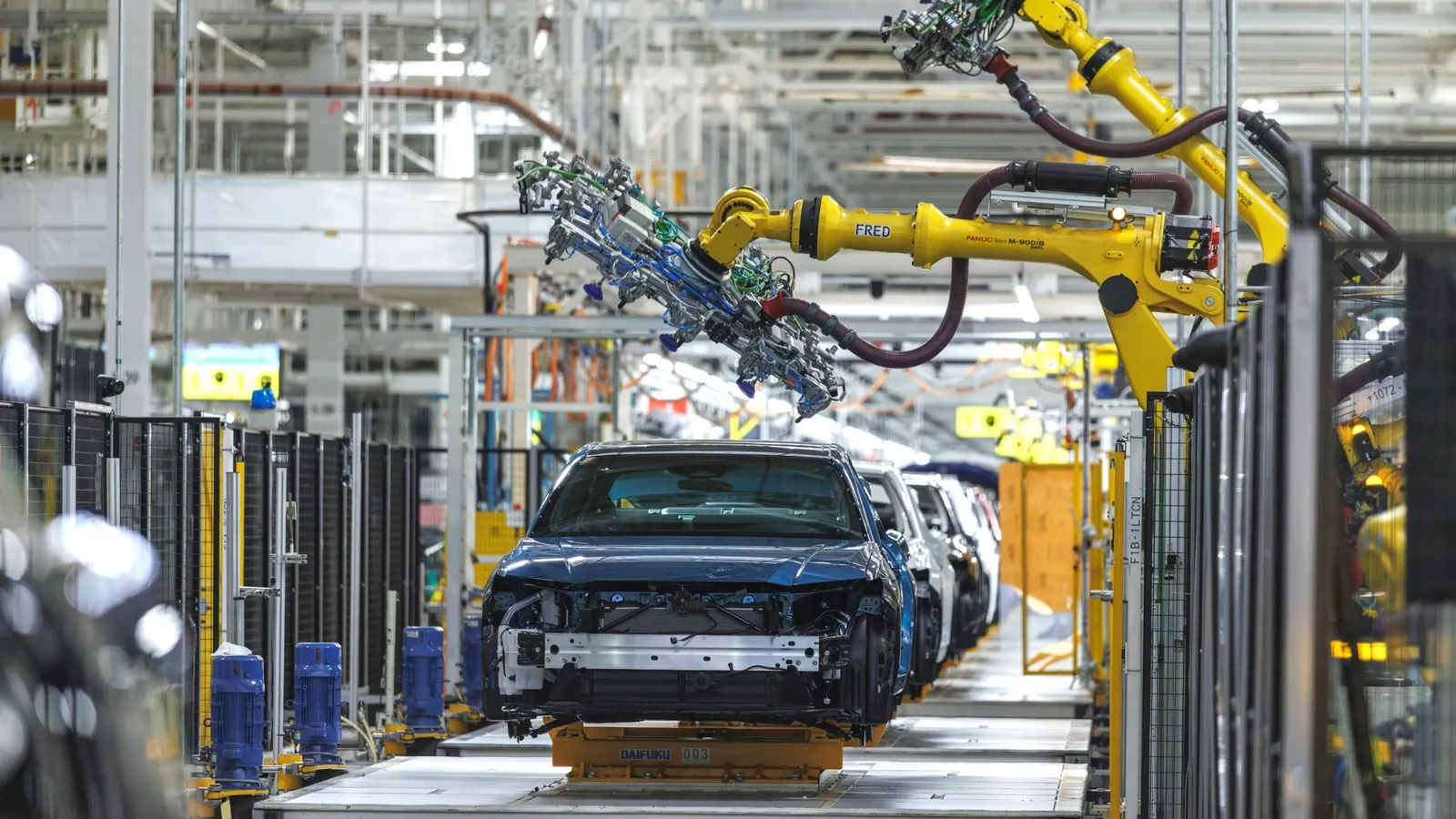
The funds are part of a larger $10 billion commitment to build out the automaker's U.S. supply chain.

Why retailers can’t agree on a fraud strategy
Digital Commerce 360 Staff
Digital Commerce 360
2026-03-24
By Matt DeLauro, President, GTM SEON
Retailers have spent years investing in artificial intelligence (AI) to fight fraud, yet many still struggle to articulate a coherent fraud strategy. While machine learning now anchors most fraud prevention programs, priorities remain fragmented across teams, tools and incentives. The result is a familiar contradiction: more intelligence in the stack, less clarity in decision-making.
That gap between intelligence and choice is widening. Nearly 68% of retailers expect to deploy agentic AI within the next 24 months, even as fraud budgets and headcount continue to grow. AI has become the baseline, but simplification has not delivered the alignment companies need, and with costs rising faster than confidence in outcomes, leaders are left with powerful technology and no shared definition of success.
How competing incentives undermine fraud strategy Fraud decisions can quickly become a negotiation rather than a strategy when organizations lack a shared reference point for acceptable risk. When teams are evaluated on conflicting goals, such as optimizing loss reduction, protecting conversion rates, guarding profit margins or focusing on eliminating friction, each metric makes sense in isolation. However, our recent AI Reality Check: 2026 Fraud & AML Leaders Report — based on a global survey of over 1,000 fraud and anti‑money laundering (AML) leaders — shows that only 47% of retailers operate fully integrated workflows. That misalignment creates an operational tax in the form of slower investigations, higher false positives and duplicated effort. The organization pays for it twice: once in technology spend, and again in manual work.
This tension becomes most visible during high-pressure flash sales. Growth leaders push for looser thresholds to protect revenue, while fraud teams respond with manual overrides. Rules change mid-campaign, friction increases for legitimate customers and no one can clearly explain which tradeoff the business chose.
Why tool sprawl keeps retail fraud disconnected Many retailers now manage fraud through a growing collection of tools rather than a cohesive system. More than 80% of merchants struggle to use data and technology effectively in their AI tools, often responding by adding new products instead of fixing their core architecture, turning theoretical flexibility into practical complexity.
Because only a minority of organizations run fully integrated workflows, many retailers rely on separate tools for checkout, accounts, loyalty and buy now, pay later (BNPL). Each system evaluates risk through a narrow lens and generates conflicting signals that teams must reconcile manually. Consequently, decision speed slows, operational loads increase and consistency becomes harder to maintain at scale.
How data silos fragment defense systems AI now sits at the core of most fraud stacks, but governance has lagged behind adoption. Our latest report shows that 98% of organizations use AI in fraud and AML, and 95% express confidence in its effectiveness. Yet, explainability and human accountability remain top concerns. When executives ask why a legitimate customer was declined, many fraud leaders still struggle to provide a clear business outcome.
That challenge is compounded by fragmented customer data. Creating a single, trusted view of identity and transaction activity remains one of the hardest problems in modern defense. According to our research, 80% of leaders say achieving unified visibility is challenging, with more than 40% rating it as extremely difficult. Shared dashboards can create the illusion of alignment, but when decision logic remains siloed by channel, outcomes stay inconsistent.
What it looks like when fraud strategy aligns Agreement on fraud strategy no longer means choosing the right tools or deploying more AI. The real shift leaders need to make is architectural. Retailers must move from disconnected tools to a command center mindset, transforming reactive alerts into systems that consistently translate risk signals into defensible decisions.
For retailers, alignm
Estée Lauder, Puig in merger talks
Daphne Howland
Retail Dive
2026-03-24
The tie-up would diversify each company’s portfolio somewhat but might look better on paper, some analysts said.

Logicor et Kryalos prévoient de développer un entrepôt de 38 000 m² près de Rome
—
Voxlog
2026-03-24
Logicor et Kryalos SGR ont signé un contrat d'achat a terme avec le maître d’œuvre et promoteur immobilier italien Techbau, pour l'acquisition d'un pole......
Dollar General CEO Todd Vasos to step down, again
Dani James
Retail Dive
2026-03-24
This time, Ahold Delhaize USA executive JJ Fleeman will succeed him as CEO, with Vasos exiting the position in 2027.
Exotec dévoile un programme d'automatisation de sept plateformes européennes de Decathlon
—
Voxlog
2026-03-24
Pour le compte de son client historique, Decathlon, Exotec a lancé un conséquent programme multisite, baptisé Skyfleet. Celui-ci couvre sept plateformes logistiques réparties......
3PLs struggle to address shippers’ tech, service, cost, and data needs
Gary Frantz
DC Velocity
2026-03-24
Operating in a market that’s evolving at a breakneck pace, third-party logistics service providers (3PLs) certainly aren’t lacking in challenges. They remain the tip of the supply chain execution spear for businesses of all shapes and sizes.
Yet as they plan and execute such fundamental 3PL tasks as storing products, filling orders, managing carriers, and delivering goods on time at the lowest landed cost, increasingly, shippers are demanding more as they seek to control disruptions, reduce risk, and ensure stability to carefully crafted supply chain operations.
Among those issues are constantly rising operating costs, shifting tariff policies, regulatory mandates, geopolitical disruptions, labor shortages, and how and where to deploy emerging technologies across the logistics ecosystem for maximum benefit.
Whether it is product at rest or in motion, shippers want their 3PLs to provide the resources, tools, technologies, real-time information, and analytics they need to successfully operate in a constantly shifting supply chain landscape.
What will it take to be a 3PL survivor?
RESILIENCE, RELIABILITY, CONSISTENCY
“In general, shippers in today’s market want 3PLs to deliver resilience, reliability, and consistency,” says Steve Sensing, president of supply chain solutions and dedicated transportation solutions for logistics giant Ryder. He believes Ryder is in a unique position to meet that need given its “port to door” inclusive logistics approach, its scope of services, and the breadth of vertical industries it serves. The company, across all its transport modes, purchases just under 10 billion freight moves annually for hundreds of customers.
In terms of demand, “it’s been a weak freight market [that] has been elongated, now going into its fourth year,” Sensing observes. And while recent reports around improving manufacturing output signal a potential rebound, “we don’t expect [freight volumes] to bounce back this year,” he says. Sensing adds that with tepid economic growth, “customers are under pressure and are trading cost for service.”
Those cost pressures are not likely to abate, Sensing believes, and may become more intense as slim margins and higher costs force more capacity out of the industry. “As smaller [truckload] carriers exit the market, our role is to help customers get ahead of that [and secure reliable capacity at competitive cost] to be prepared for when the market bounces back,” he notes.
Is there a magic bullet for 3PL success? Sensing cites two areas. “First, during the RFQ [request for quotation] process, you have to understand deeply your customer’s business and what they are trying to solve. If you don’t do that, there will be disconnects, and you will fail,” he notes.
Clients often have strong ideas about the problems that need solving and what they want their end game to be, he says. But it is incumbent upon the 3PL, based on its experience and expertise, to communicate early and often, suggesting ideas or approaches that validate or improve on the customer’s objectives, and most importantly, collaborate honestly and openly with the client to come up with the best plan, Sensing explains.
The second area is start up. “The ability to effectively start up a new piece of business and communicate effectively with the customer from day one is critical. That is the most difficult part of what we do, and [it’s] where we make some of our most significant investment in the team,” he says. “You will have issues; no start up is ever perfect,” Sensing adds.
Then once the operation is up and running, it’s about defining the KPIs (key performance indicators) that will measure success—and reveal areas that need attention. Sensing believes that one area where Ryder stands out and others struggle is continuous improvement. He emphasizes that the process of delivering and executing a solution doesn’t stop once start up is done. That’s just the first inning. “We wake up every day trying to earn our customer’s business by saving it money and proactively driving improvement for it and its end-customers.”
CONVERGENCE OF THE PHYSICAL AND DIGITAL
While the fundamental role of the 3PL has not substantially changed, the challenges 3PLs face, the role shippers want them to play, and the tools they use to manage and execute the service are evolving in multiple directions, observes Matthew Beckett, senior director, analyst for the logistics and supply chain practice at the research and advisory firm
Lire l'article original
DC Velocity · Gary Frantz
The Home Depot beefs up digital shopping experience for pros
Tatiana Walk-Morris
Retail Dive
2026-03-24
As it pursues home improvement professionals, the retailer is enhancing the online experience with tools for better project management.
How Foreign Brands Test the U.S. Market
Oksana Tsvigun
Practical E-Commerce
2026-03-24
Before spending big money, test the demand in two ways.
Toyota Invests $1 Bilion in Kentucky and Indiana Plants
—
Supply Chain 247
2026-03-24
Toyota is investing $1 billion to expand production and upgrade its Kentucky and Indiana plants.
Prologis and GIC Launch $1.6 Bilion U.S. Logistics Venture
—
Supply Chain 247
2026-03-24
Prologis and GIC are investing $1.6 billion in new U.S. logistics facilities tied to e-commerce demand.
Eight Ways AI is Transforming the Modern Warehouse
—
Supply Chain 247
2026-03-24
AI is giving warehouses a better way to manage demand, assign work and keep orders moving in real time.

Uber bullish on delivery bots and drones despite ‘friction’
Max Garland
Supply Chain Dive
2026-03-24
The company's network can tap into more than 1,000 robots in over 10 cities, although aspects of the technology still need "to be ironed out," per its CFO.
The Works’ ecommerce exit: a long time coming? Industry insight suggests yes
Amanda Vlietstra
Internet Retailing
2026-03-24
The Works’ decision last week to shut down its ecommerce operations was positioned as a decisive return to a store‑first strategy after years of underperforming online sales. With more than90% of its sales coming from its 500+ stores and online remaining a marginal, structurally loss‑making channel, the decision should not come as a surprise, says Zoe Mills, head of UK retail at Globaldata.
“Shutting down its transactional website is an almost inevitable reaction from The Works to pivot focus to its more successful instore operations and protect profits to ensure long-term viability for the business,” Mills said. Pointing to the fact that its ecommerce operations have been in “terminal decline” since 2020/21, she questioned “whether this action could and should have been taken sooner.”
Operational failures accelerated the problems
Persistent issues with two third‑party fulfilment partners severely affected ecommerce performance over the past two years, wiping out progress and contributing to ongoing losses.
“These issues with its newest fulfilment partner meant that in its latest results for the Christmas period to 18 January 2026, its online capacity was limited, resulting in online sales declining 51.8% against an already very weak comparative,” Mills said. “The challenge for The Works, if it had retained its online operations, would have been to rebuild online demand after reducing its marketing spend. This investment would have been an unnecessary risk for The Works, as its stores are well-placed to continue generating sales growth.”
These challenges led the board to decide the online shop was no longer sustainable, triggering closure costs of around £2m but setting expectations for improved cash flow in the longer term.
“The removal of this online burden should have a positive impact on The Works’ business and enhance its prospects in 2026, despite the ongoing economic challenges in the UK. Its value focus will support it as shoppers trade down from mass market book retailers, including Waterstones and TG Jones, and craft retailers such as Hobbycraft, which has struggled itself,” Mills added.
Mills’ assessment fits with financial updates across multiple reports. Shares in The Works jumped on Friday as investors welcomed the shift in strategy. The retailer has already increased future earnings guidance from £12.7m to £15m for FY26.
Store‑led growth ahead
The Works is now pushing ahead with steady bricks‑and‑mortar expansion, planning five net new stores in FY26 and ten more in FY27, with long‑term scope for up to 100 additional sites. Like‑for‑like store sales remain strong, up 3.3% year‑to‑date. An economic environment where, as PwC’s Retail Outlook 2026 reports, lower‑income and older shoppers in particular are “searching harder for value and trading down” underscores the decision by this value-led retailer to focus investment where its proposition is strongest.
The closure of ecommerce at The Works may feel abrupt, but as Mills notes, it is the culmination of a long‑running decline. By shedding an unprofitable channel and doubling down on a thriving store estate, The Works enters 2026 with a clearer path to profitable, focused growth.